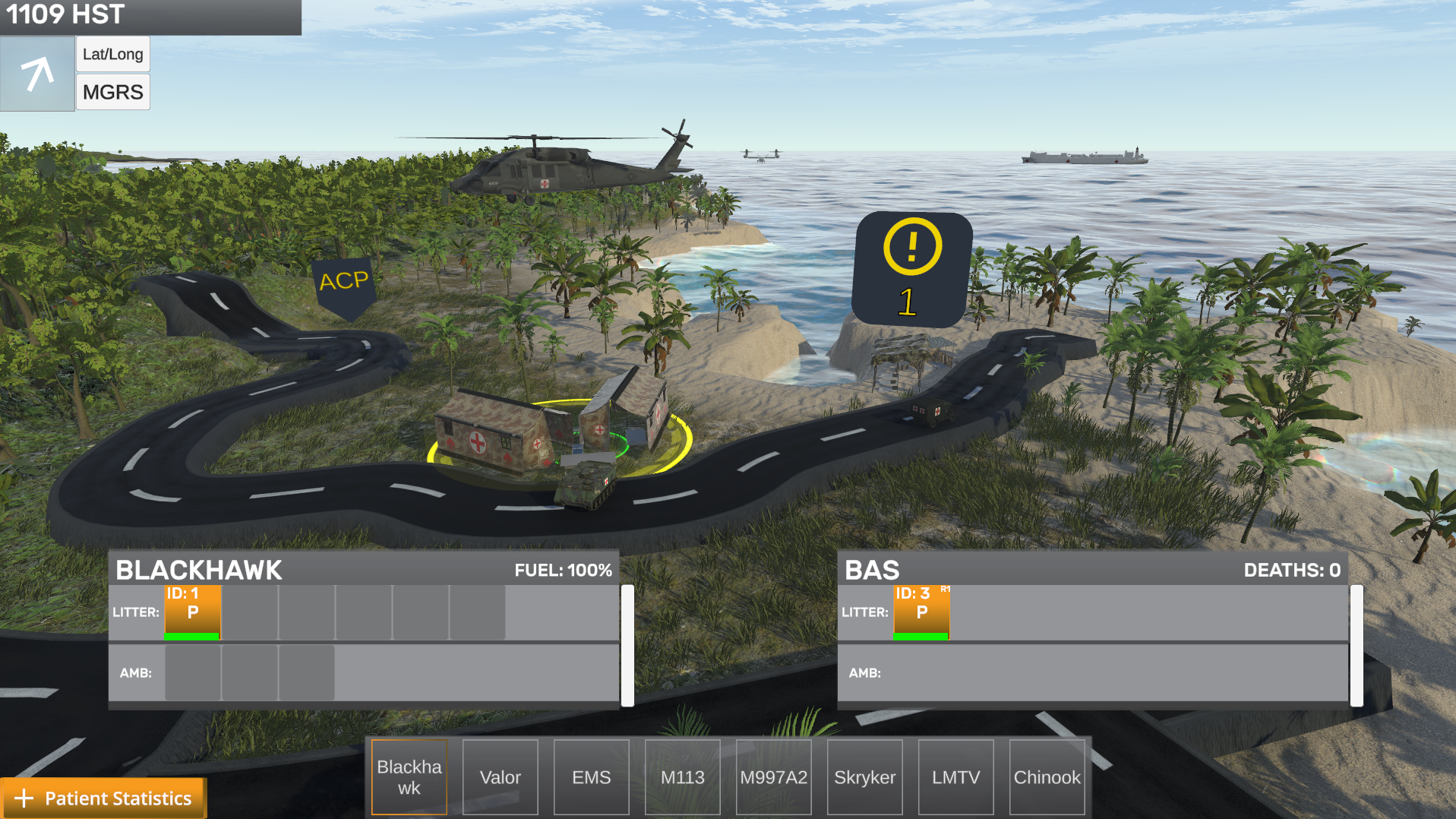
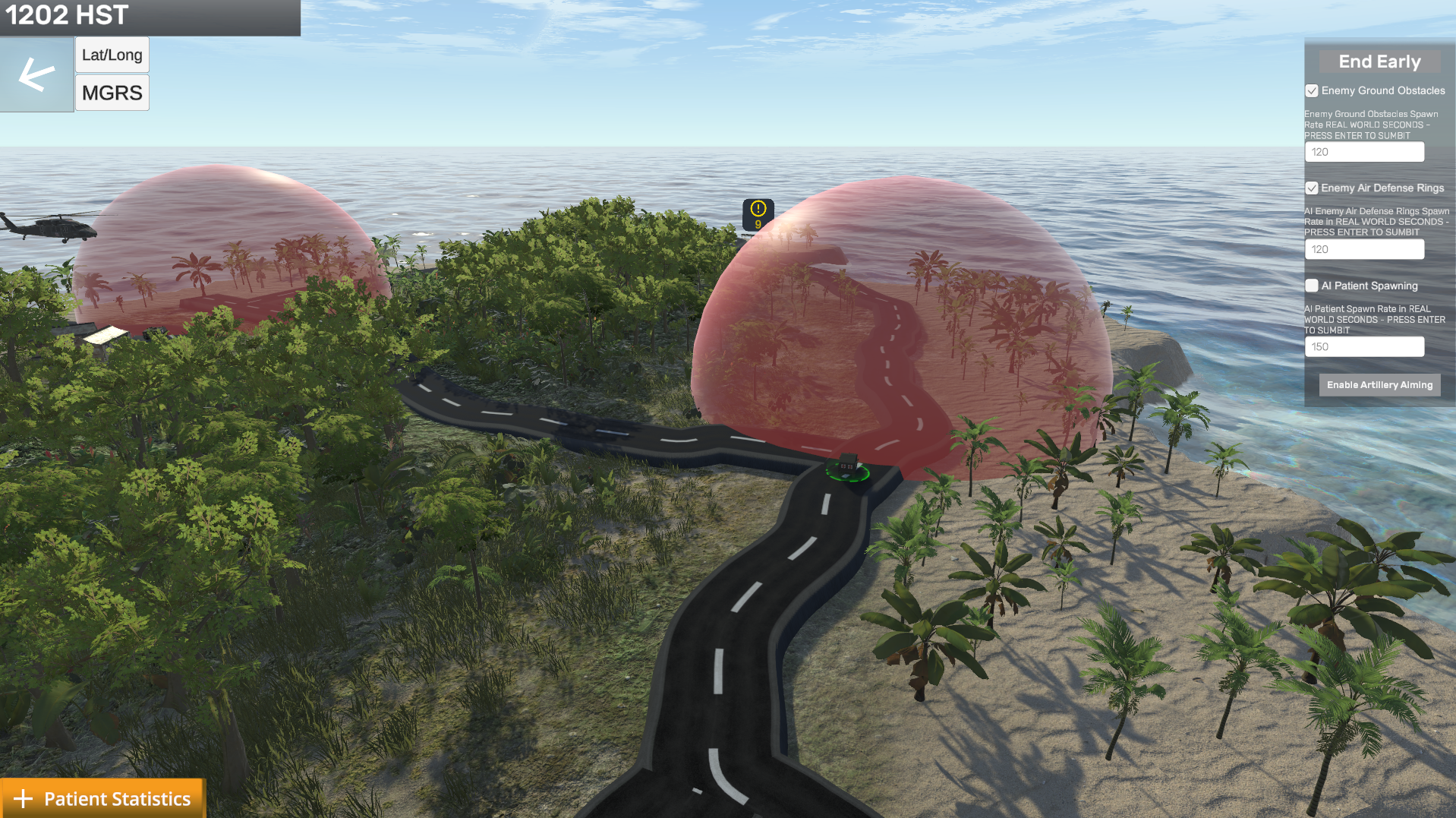
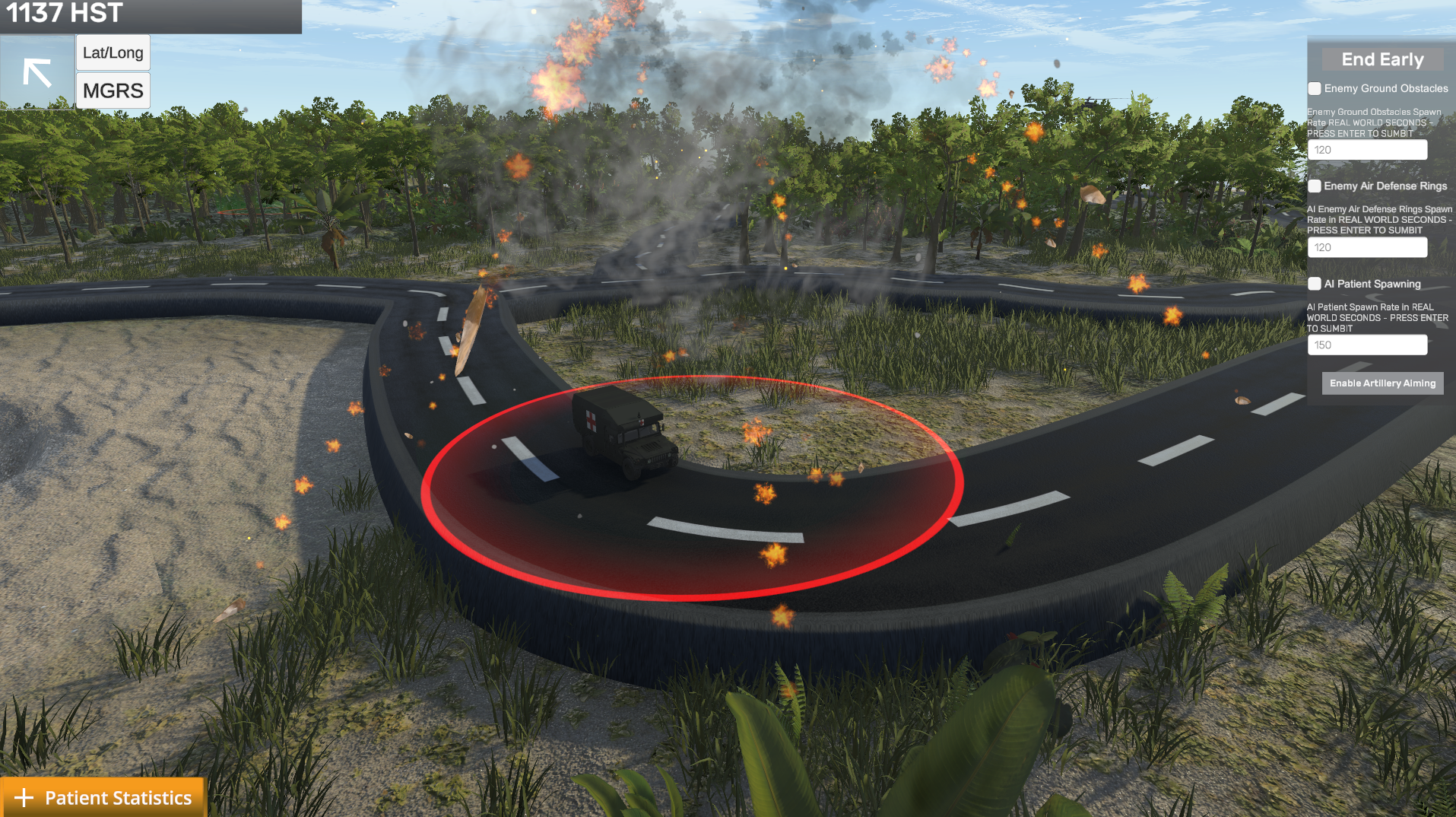
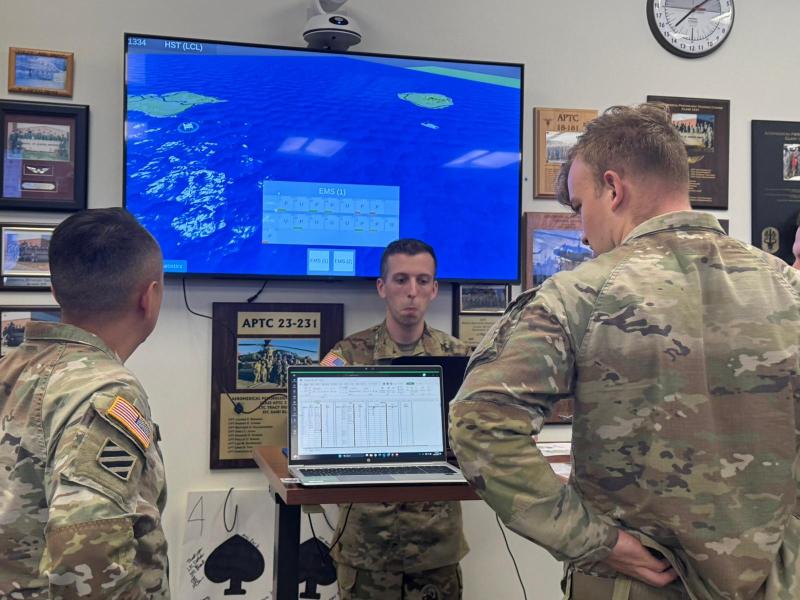
The Medical Evacuation Wargame Initiative started as my Berkeley M.Eng. capstone project in collaboration with UC Berkeley, Stanford University, and the US Army. The simulation is used in the Medical Evacuation Doctrine Course, where all students collaborate to develop an evacuation plan based on scenario, then 5+ students execute the plan using laptops to coordinate medical platforms including helicopters, ground vehicles, and ships to efficiently evacuate casualties to medical facilities over 4 hours of gameplay. Instructors monitor the scenario in real-time and can inject challenges like enemy artillery, adversarial AI, or mass casualty events.
Before this system, students in the Medical Evacuation Doctrine Course could only plan scenarios on paper and roleplay. Now the entire class can work together to create a strategy, then watch as their plan succeeds or fails in real-time as it's executed. The system logs all platforms and patient outcomes, providing detailed statistics at the end of each game that instructors use to give targeted feedback. Currently deployed at Fort Rucker, the wargame combines realistic platform capabilities, doctrinal evacuation policies, and dynamic challenges to create training scenarios that mirror actual operational complexity, preparing students for real-world situations.
As lead developer, I handled the technical implementation, system architecture, and coordination between developers and U.S Army stakeholders and sponsors. I managed the development timeline, integrated feedback from project stakeholders, and worked closely with peer collaborators to build out features. I am the current sole developer maintainer of the project.
Key Features
- Diverse evacuation platforms (helicopters, ambulances, medical ships) with realistic capabilities and constraints.
- Adversarial AI trained with reinforcement learning that places ground obstacles and air defense zones to challenge players.
- Real-world policies like the one-hour evacuation standard for urgent patients to reinforce learned course objectives.
- Instructor controls for managing difficulty through casualty flow, supplemental medical platforms, and artillery strikes.
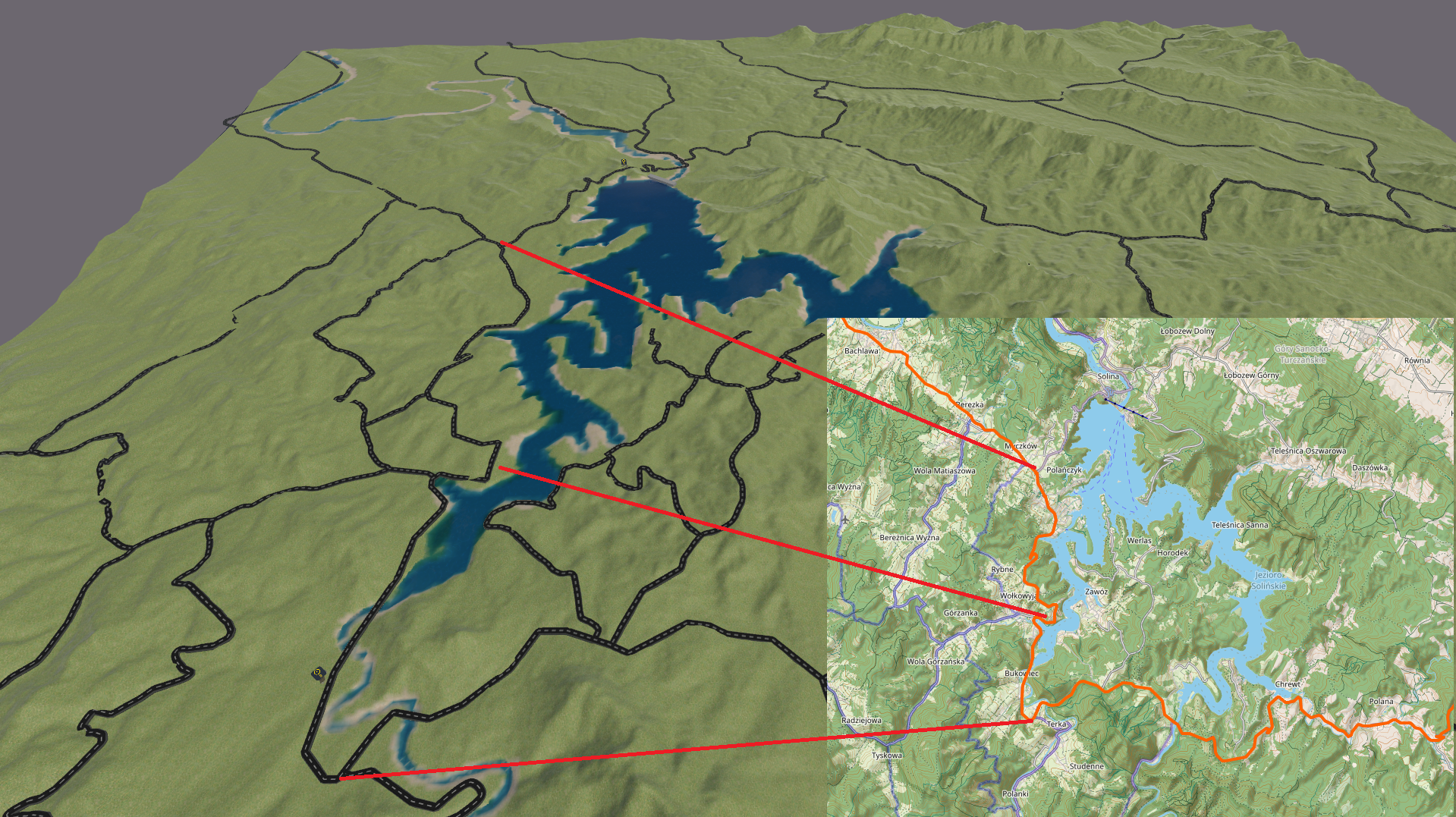
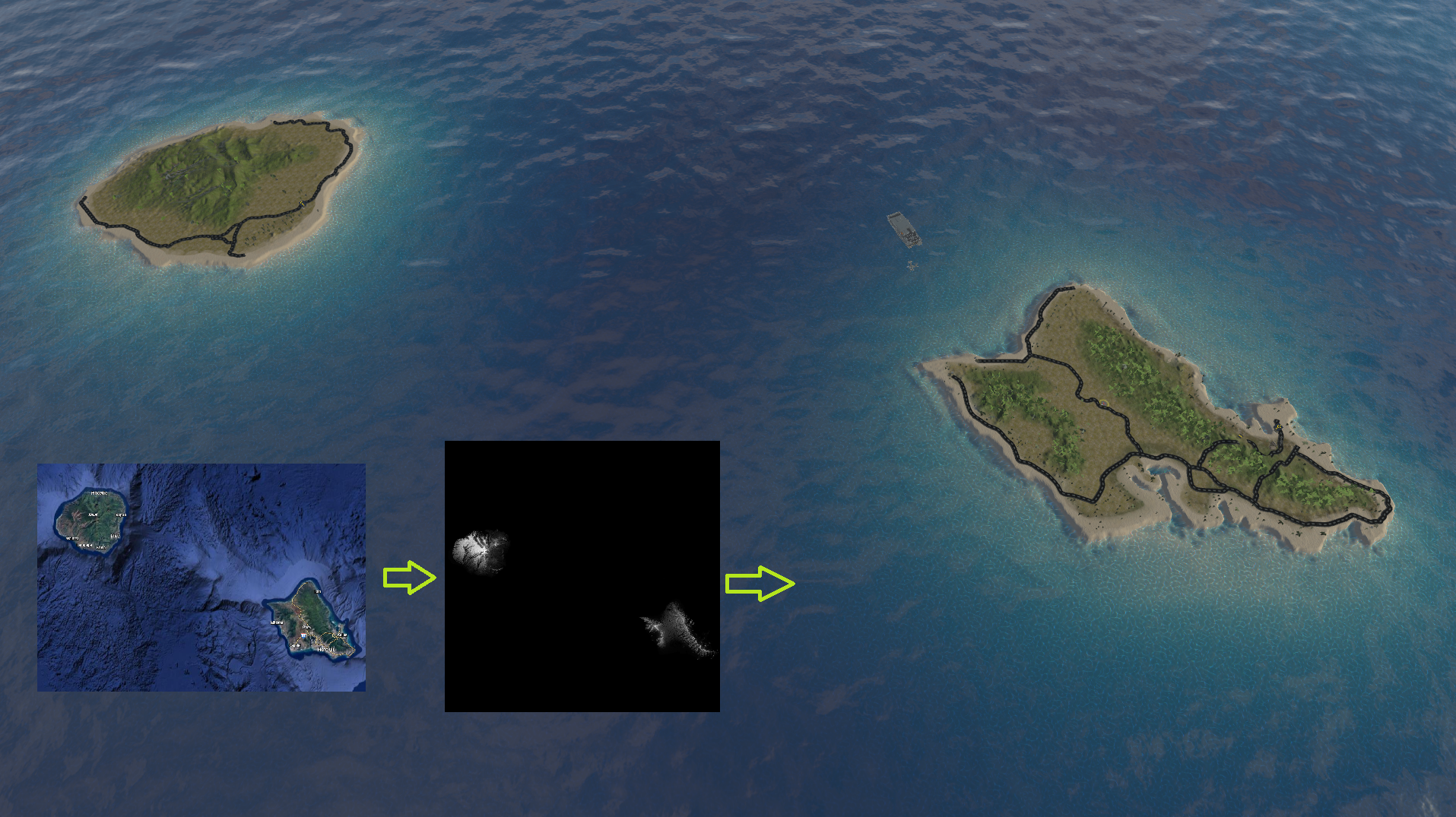
- Highly accurate map scaling, terrain modeling, road placement, time conversion, and vehicle speeds that respect real life constraints and student planning. If they calculate a route will take 15 minutes, the simulation accurately reflects that timing.
Future Work
The project continues from its initial development through generous grants, enabling more advanced features enhancing student experience and future research opportunities at Stanford.
Collaborators
Mahdi Al-Husseini, P.E. - Project Sponsor, Stanford Ph.D Candidate, U.S Army Medical Evacuation Instructor
Ram Krishnamoorthy - U.S Marine and Berkeley Graduate Student who created the wargame scenario and managed applied statistics.
Vishal Kumar - Berkeley Graduate Student who contributed to AI/ML systems development